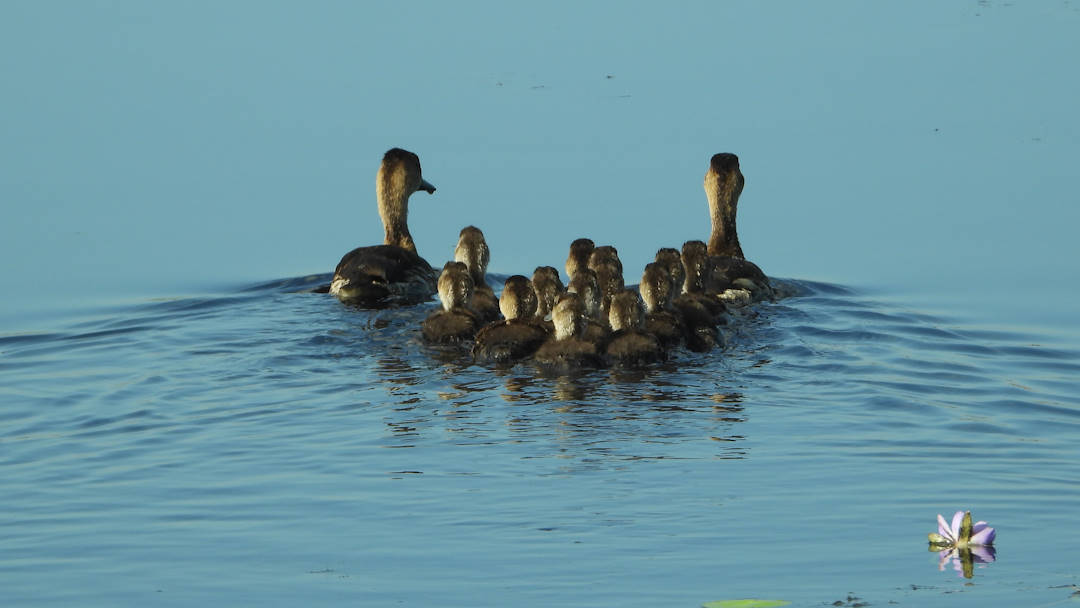
Radical collaboration: Adult ducks usher their ducklings away from imminent danger Linden Young
Estimated reading time: 6 minutes
“Radical collaboration is hard. It requires us to adopt a different mindset; it requires us to listen to, share and work with people who we may have previously seen as competitors.” CHRISTIANA FIGUERES. 10 years ago she negotiated the Paris Agreement on Climate Change
part 2 : Travel for Nature series.
global collaboration
QUICK read…..
Key Takeaways
- Echidna Walkabout emphasises radical collaboration to tackle climate and biodiversity crises in the travel industry.
- Radical collaboration uniquely addresses urgent challenges, allowing groups to devise innovative solutions in times of crisis.
- Historically, radical collaboration has led to significant achievements, eg. Covid vaccines
- Successful radical collaborations provide lasting changes due to their community-driven foundations and expansive networks.
- Engaging in radical collaboration can empower tourism and conservation efforts through initiatives like the Koala Clancy Foundation.
Climate and nature : catalysts for radical collaboration in tourism
As a fragmented travel community slips deeper into climate and nature crises it must embrace radical collaboration to ensure its survival.
Most communal animals use radical collaboration to escape danger. A flock of birds chased by a falcon, a school of fish attacked by a shark or a mob of kangaroos hunted by dingoes — they all devise instant, radical strategies to avoid the predator.
Urgency makes radical collaboration different from “regular” collaboration. In times of crisis we need to purposely step beyond what is easy and find better, radical solutions.
Oddly, we in the travel industry avoid being “radical” because we think it’s antisocial and may cause clients to book with a different company. Nothing could be further from reality.
Faced with global climate and nature crises, travellers are embracing radical solutions; they want to give back and see this as being both positive and prosocial.
“Radical collaboration pushes past the status quo and shakes up power dynamics.” Christiana Figueres: If we keep abusing nature it will collapse, taking us with it. We need a new mindset The Guardian, Nov 2022
Remember COVID-19? Science and industry created vaccines against Covid-19 in 12 months (normally vaccines take years to develop). Tourism was one of the main beneficiaries of this radical collaboration
Globally industries are embracing radical collaboration
Climate and biodiversity crises are seriously impacting the travel industry. As more destinations become less desirable due to extreme, unpredictable weather or nature loss (often both) the travel industry is becoming critically vulnerable as people curb or cancel their travels.(eg. Ghost Resorts: how receding snow is closing ski resorts)
Radical collaboration can deliver the urgent solutions the travel industry needs.
For example, concurrent with the evolution of the Paris Climate Agreement, many industries have changed the way they do business by building in solutions that reduce carbon emissions and support biodiversity.
Significant business aligned organisation have arisen including the climate advocacy group, We Mean Business Coalition, which Echidna Walkabout supports. At the time of writing 21,633 businesses, globally, support the Coalition’s action plans.
It’s Now for Nature is a global nature advocacy coalition that’s having considerable success helping businesses create Nature Strategies thus enabling them to play an active role in protecting nature.
This is how global tourism collaborates
In 2020 the Future of Tourism Coalition (FoT) brought together 5 of the world’s most forward thinking not-for-profit tourism organisations. This radical collaboration pinpointed 13 Guiding Principles (based on sustainable practices) then created a comprehensive Toolkit to help tourism businesses meet the principles. FoT has a membership of over 500 signatories, including Echidna Walkabout, and represents businesses, governments, and NGOs dedicated to sustainable tourism.
At COP26 in 2021, Echidna Walkabout co-signed the Glasgow Declaration on Climate Action in Tourism. The United Nation’s One Planet Network now coordinates over 400 signatories worldwide, representing a growing coalition of international tourism businesses — including 13 from Australia.
In our previous article in this Travel for Nature series we mentioned our relationship with Sustainable Travel International that is providing us with support as we build our plans for reducing our carbon footprint as part of our Travel for Nature solutions. Included in our collaboration with STI is a radical approach to carbon offsetting that includes ethical, community led action on biodiversity in a number of countries.
Echidna Walkabout’s radical collaborations in Australia
As a subsidiary of Australian Geographic Travel, Echidna Walkabout helps contribute to Australian Geographic’s overall profits, all of which are donated to conservation programs through its charity the Australian Geographic Society.
Echidna Walkabout helped establish the Koala Clancy Foundation and we continue to contribute $10 from every person on our tours to the Foundation. You can help KCF grow koala forests here
We were a founding member of Australian Wildlife Journeys that advocates for biodiversity solutions by supporting businesses that showcase wildlife in the wild. We drive this through a major sustainability policy and encourage all members to emulate it.
All these collaborations support conservation projects throughout Australia.
3 reasons why radical collaboration works
Through years of working with radical collaboration, I’ve learned that its success transforms the world because:
- In difficult times new ideas bring people together to build purposeful changes
- Changes made by collective input last longer because they are flexible and have strong foundations in the community that built them. The conquest of apartheid and Covid-19 are prime examples of successful, long term solutions.
- Radical collaborators build bridges that channel ideas to broader networks which tend to grow exponentially, becoming stronger. (On the other hand, combative competition has a tendency to become isolated, defensive and weak over time.)
Now is the time for tourism to build on radical collaboration
Tourism is utterly dependent on moderate, predictable weather and thriving natural environments. Both these foundations are collapsing. We simply don’t have time for slow, measured adaptation, we must act now!
For tourism to survive it must actively support renewable energy, dramatically cut CO2 emissions and demand governments take action to protect nature.
This will take courage and cannot be achieved alone : radical collaboration will be the driving force for change.
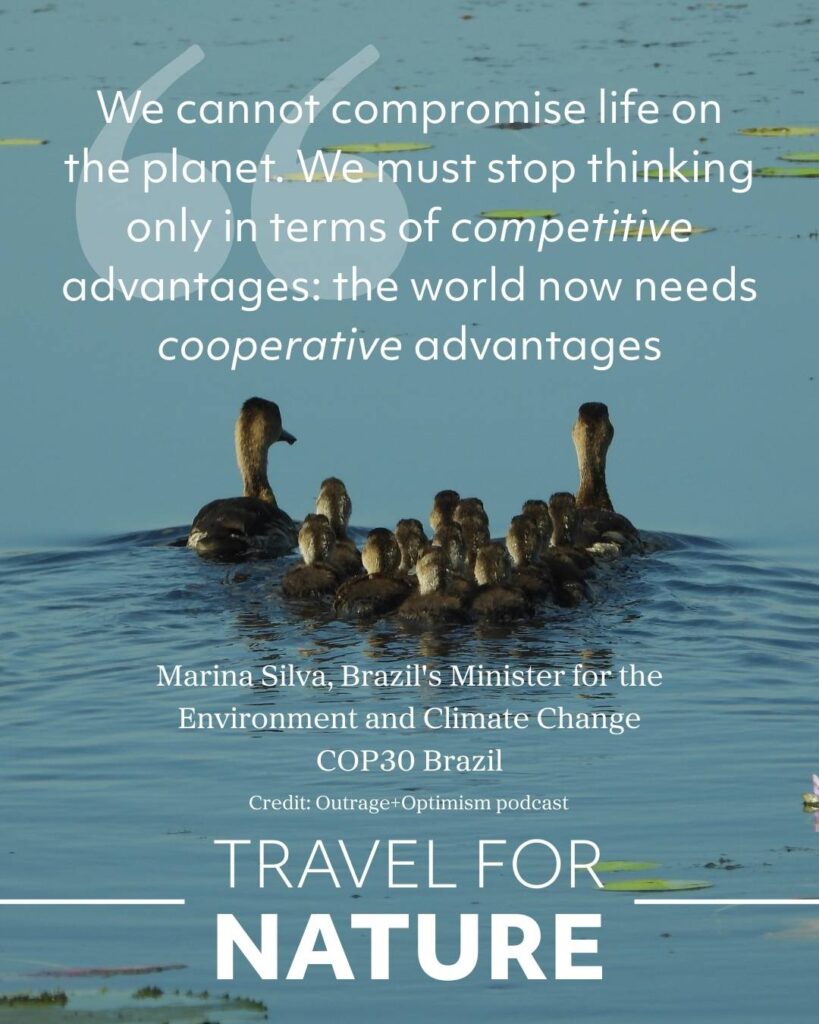
The Deep Read: Travel for Nature Framework
For full details of our Travel for Nature philosophy click on the image below:

More related stories…..
Help unleash the power of Conservation Travel
Step into the future of travel. Join one of our Conservation Travel tours. An increasing number of these tours include an important Citizen Science project.
➡️Echidna Walkabout is a Founding Member of Australian Wildlife Journeys.
➡️We create, guide and operate tours for Australian Geographic Travel
➡️$10 from every person on tour goes to Koala Clancy Foundation
➡️Donate to Koala Clancy here